>>

A classic French thin pancake inspired by Paul Bocuse: delicate, flexible, and golden. Perfect for sweet or savory fillings and easy to make at home.
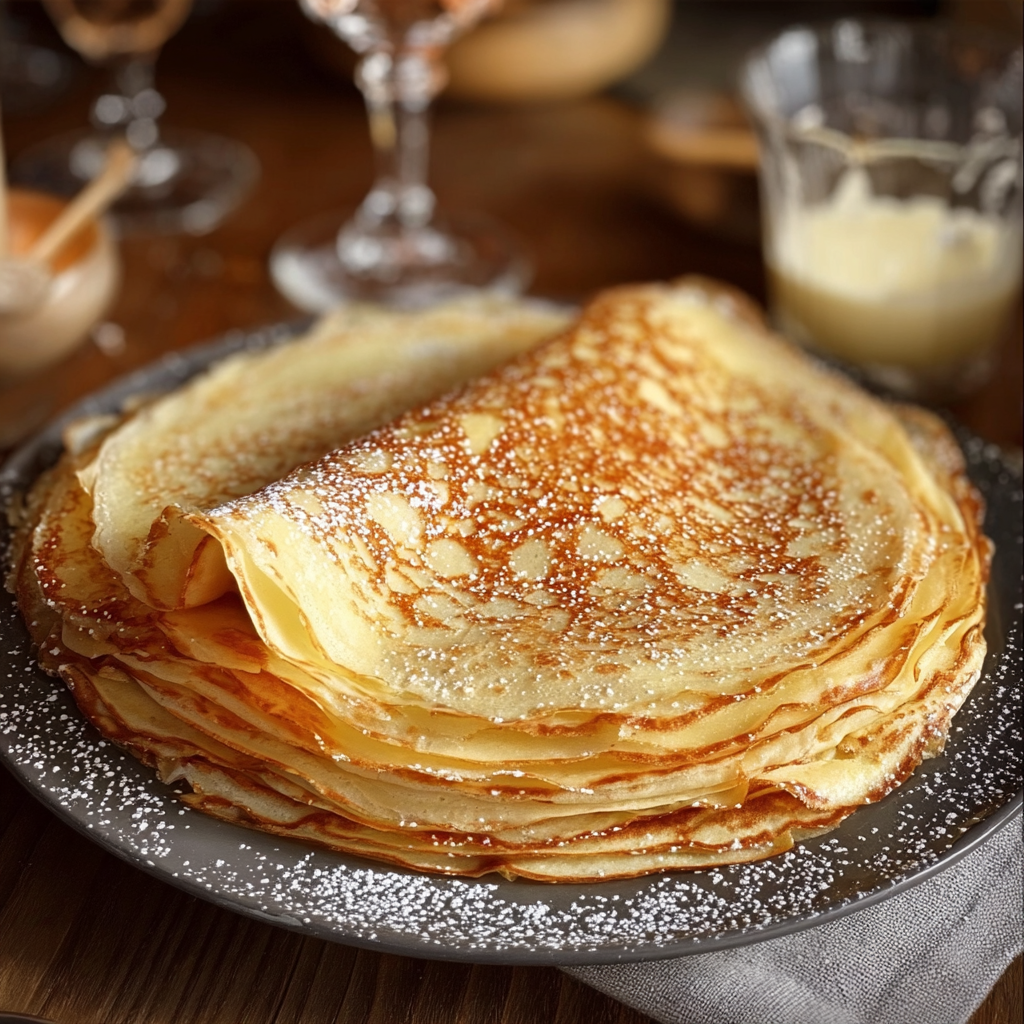
This recipe for Crêpes Fines et Dorées has been a quiet staple in my kitchen for years. I first learned this approach—light, flexible batter and a short resting period—while reading a collection of French brasserie notes and adapting techniques to what I keep in my pantry. The result is paper-thin pancakes with a lacy edge and a tender center: when I fold them over a warm fruit compote or a melted slice of Comté, the difference is unmistakable. The texture is silk on the tongue, the flavor is lightly eggy with a whisper of butter, and the color should be a warm, even gold.
What makes this preparation special is the balance between simplicity and technique. With only a few ingredients—flour, eggs, milk, and a pinch of salt—you get an enormous range of possible dishes. I often make a batch for a leisurely Sunday brunch, filling some with jam and others with sautéed mushrooms and crème fraîche. The technique of whisking the batter smoothly, allowing it to rest, and using a well-heated pan yields crêpes that are both tender and sturdy enough to hold a filling without tearing.
When I first served these to friends, one taste led to a second and then a discussion about fillings. My father-in-law claimed they reminded him of a bistro in Lyon, and since then I always make a double batch when family comes over. The technique is forgiving and the payoff is always crowd-pleasing.
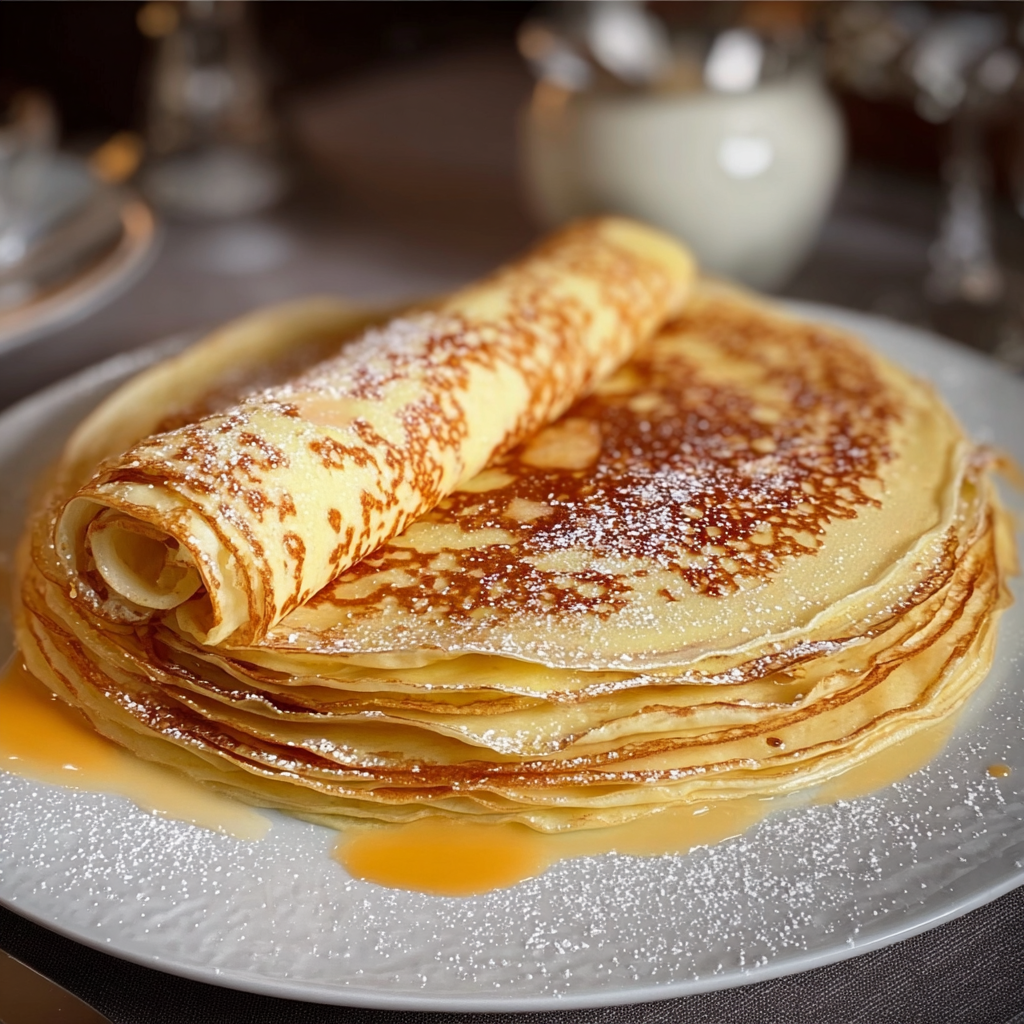
I love that these crêpes bridge everyday simplicity and celebratory food. One Saturday I made a stack for a small dinner party and served savory crêpes with a mushroom and cream filling alongside lemon-sugar crêpes for dessert. Neighbors asked for the recipe, and the next week they brought me a jar of chestnut spread in thanks—little rewards that make cooking feel like conversation.
Store unused batter in an airtight container in the refrigerator for up to 48 hours; stir gently before using as it may separate slightly. Cooked crêpes keep in the refrigerator for 3 days when stacked with parchment between each layer to prevent sticking. For long-term storage, place single layers separated by parchment in a freezer-safe bag and freeze flat for up to 3 months. Reheat frozen crêpes in a warm skillet for 30 seconds per side or wrap in a damp paper towel and microwave for 20 to 30 seconds.
To make dairy-free crêpes, substitute the whole milk with an equal volume of unsweetened oat or almond milk—expect a slightly different mouthfeel and lighter color. For gluten-free, use a 1-to-1 gluten-free flour blend and allow additional rest time; the texture will be more delicate, so handle cooked crêpes more gently. For extra-light crêpes, replace 1/4 cup of milk with sparkling water; the bubbles help produce a finer network of air in the batter. For richer flavor, swap 2 tablespoons of milk for melted butter included in the batter.
For a classic sweet finish, fold with granulated sugar and a squeeze of lemon, or spread with Nutella and top with sliced banana. For savory, spread a thin layer of softened goat cheese, add warm caramelized onions and smoked salmon or wilted spinach with a drizzle of crème fraîche. For brunch, stack with thin slices of ham and a runny fried egg on top. Garnish with finely chopped chives for savory, or a dusting of confectioners' sugar for sweet presentations.
Crêpes originate from Brittany in northwest France where buckwheat and wheat crêpes evolved as everyday food. Wheat crêpes—often thinner and sweeter—became associated with Parisian cafés and bistros. The preparation here leans toward the delicate, paper-thin crêpes favored by French chefs like Paul Bocuse who emphasized technique and quality of base ingredients. Their versatility made them central to celebrations such as Candlemas (La Chandeleur), when families traditionally make crêpes to bring good fortune.
Adapt winter crêpes by filling with warm apple compote and a splash of Calvados. In spring serve with fresh berries and a dollop of crème fraîche. For fall, add a teaspoon of cinnamon and nutmeg to the batter and pair with roasted pear and mascarpone. During summer, keep a pitcher of chilled fruit coulis on hand to dress crêpes quickly for an outdoor brunch.
Make a double batch of batter and refrigerate half for later in the week. Cook crêpes in the morning and stack them with parchment; they will retain moisture and can be refreshed in a warm skillet for seconds. For packed lunches, roll crêpes around savory fillings and wrap tightly in parchment—reheat in a toaster oven or skillet to restore crispness. Label frozen stacks with date and filling to keep your prep organized.
Crêpes are simple but rewarding: a few small technical habits—sift the flour, rest the batter, heat the pan properly—yield consistently elegant results. Share them hot from the pan and encourage everyone to assemble their own; it turns a meal into an event and makes these thin, golden pancakes feel like a celebration of good food and company.
Rest the batter for at least 30 minutes at room temperature to relax gluten and hydrate the flour for tender crêpes.
Heat the pan until a drop of batter sizzles; use a light brush of melted butter to prevent sticking without burning.
If the batter is too thick, thin with a tablespoon of milk or warm water at a time until pourable.
Stack cooked crêpes with parchment between layers to prevent sticking and make reheating easy.
For even thinner crêpes, pour less batter and swirl the pan quickly to coat the surface in a single thin layer.
This nourishing crêpes fines et dorées – esprit paul bocuse recipe is sure to be a staple in your kitchen. Enjoy every moist, high protein slice — it is perfect for breakfast or as a wholesome snack any time.
This Crêpes Fines et Dorées – Esprit Paul Bocuse recipe makes perfectly juicy, tender, and flavorful steak every time! Serve with potatoes and a side salad for an unforgettable dinner in under 30 minutes.
Sift 2 cups of flour into a large bowl to aerate and remove lumps. This creates a lighter batter and prevents pockets of dry flour.
Make a well in the center, crack in 4 eggs, and begin whisking from the center outward to combine slowly with flour for an even emulsion.
Pour the milk in a thin stream while whisking continuously until smooth. Adjust thickness with a tablespoon of milk or warm water if needed.
Add a pinch of salt (and sugar for sweet). Cover and let rest for 30 minutes at room temperature to relax gluten and hydrate the flour.
Heat a nonstick pan over medium, brush with melted butter or oil, pour a small ladle of batter, swirl to coat, cook 1 to 2 minutes per side until golden.
Stack cooked crêpes with parchment between layers, cover with a towel to keep warm, and serve with desired sweet or savory fillings.
Last Step: Please leave a rating and comment letting us know how you liked this recipe! This helps our business to thrive and continue providing free, high-quality recipes for you.
Leave a comment & rating below or tag
@aiolirecipe on social media!
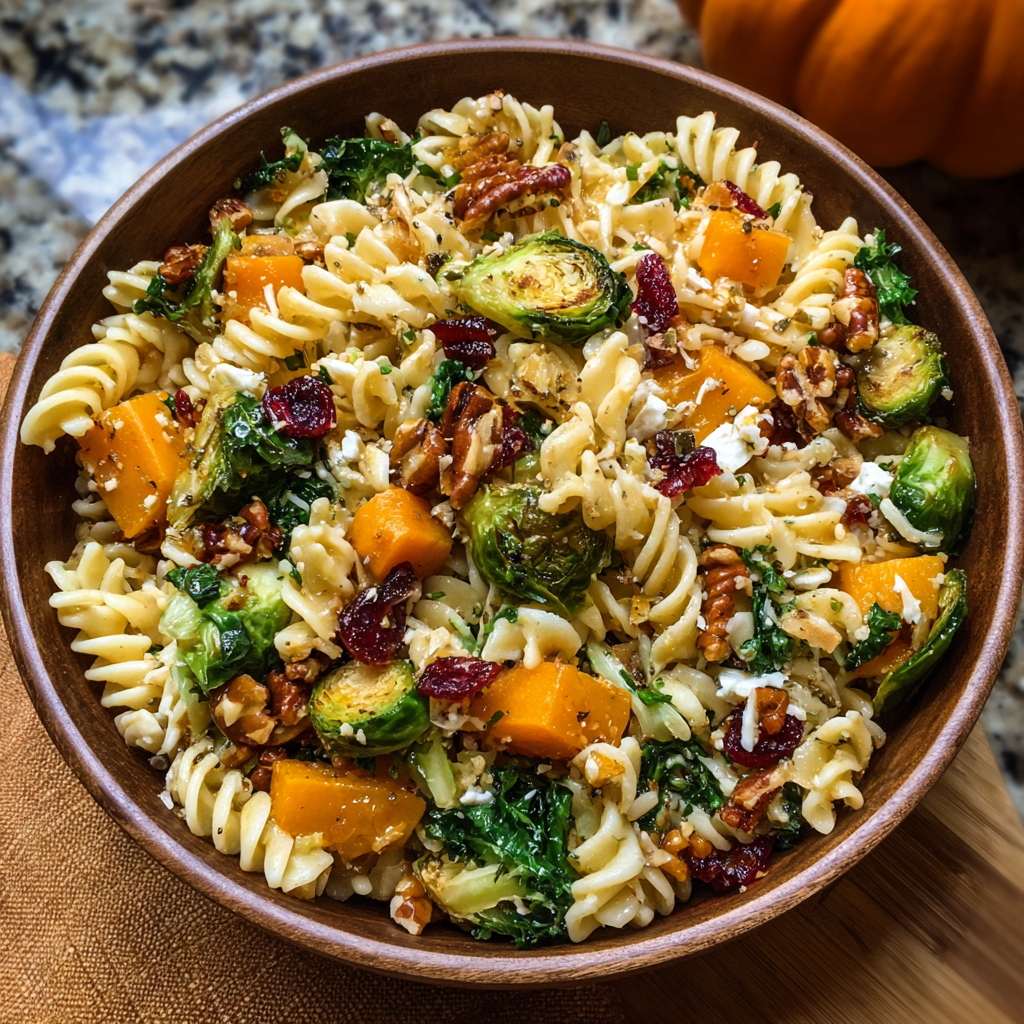
A cozy, colorful salad that celebrates autumn flavors — roasted butternut squash and Brussels sprouts tossed with pasta, cranberries, pecans, and tangy feta, finished with a balsamic vinaigrette.

Bright, tangy cilantro-lime marinated flank steak served over rice with black beans, corn, fresh veggies and creamy avocado for a fast, healthy weeknight bowl.
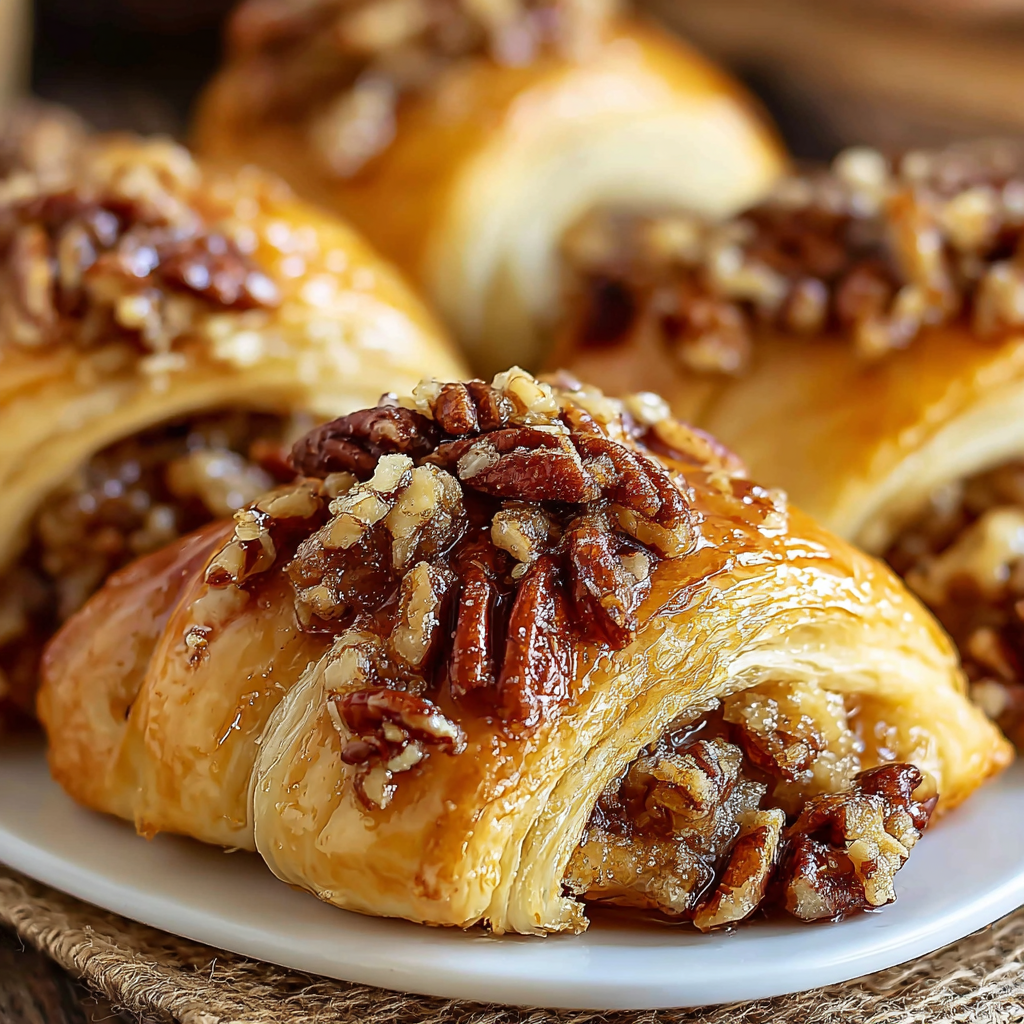
Buttery crescent rolls filled with a sweet pecan pie–inspired filling — a quick, crowd-pleasing dessert perfect for holidays or weeknight cravings.
Leave a comment & rating below or tag @aiolirecipe on social media!
Enjoyed this recipe? Share it with friends and family, and don't forget to leave a review!
This recipe looks amazing! Can't wait to try it.
Comments are stored locally in your browser. Server comments are displayed alongside your local comments.
Join to receive our email series which contains a round-up of some of our quick and easy family favorite recipes.